
Cricket’s global landscape is evolving rapidly with fans craving more crossover tournaments that unite stars from different leagues. Once upon a time, the Champions League Twenty20 (CLT20) was the ultimate dream where the best domestic teams from India, Australia, South Africa, and beyond competed on one stage. The tournament ended in 2014, but in 2025, murmurs of its return have reignited excitement. Could 2026 be the year the CLT20 returns? Let’s explore the growing buzz, the potential structure, and the challenges standing in the way.
Possibilities Of CLT20 of Comeback in 2026:
The possibility of CLT20 returning in 2026 seems stronger than ever before, driven by a mix of commercial interest, fan nostalgia, and the global rise of franchise cricket. Multiple reports from leading cricket sources suggest that the ICC and major boards such as BCCI, Cricket Australia, and Cricket South Africa are in advanced discussions to reintroduce the tournament.
The rapid success of leagues like SA20, Major League Cricket, and ILT20 has reignited the idea of uniting the champions of different leagues on a single global platform.
With franchise ownerships expanding across continents and streaming giants seeking exclusive cricket content, the timing appears ideal. Moreover, 2026 offers a convenient window between international tournaments, allowing top players to participate without conflict.
Origins Of The Champions League Twenty20:
The CLT20 was born in 2009, inspired by the UEFA Champions League in football. It aimed to bring together the champions of T20 leagues from around the world, including the IPL, Big Bash, and South Africa’s domestic circuit. It had everything: fireworks, franchise pride, and global stars sharing the same pitch.
However, despite the initial hype, the tournament struggled to sustain its momentum.
- The novelty faded as fans found it hard to connect with non local teams.
- Financial losses grew for organizers and broadcasters.
- Player availability issues often left teams underpowered.
Still, its concept was revolutionary, a club based global competition in cricket. The nostalgia attached to it makes the talk of a 2026 revival even more compelling.
Potential Role Of Franchise Owners in CLT20:
Franchise owners have become central figures in modern cricket economics. Many, like Reliance, JSW, and Knight Riders Group, own teams across multiple leagues. Their involvement will determine how CLT20 functions in 2026.
These owners see the revived tournament as a brand unifier. A Mumbai Indians fan in India can support MI New York or MI Cape Town, strengthening global loyalty. Similarly, Kolkata Knight Riders’ presence in CPL and UAE T20 can extend its reach.
However, ownership overlap may raise questions about competition fairness. The ICC and boards will need clear rules to prevent dominance or conflicts of interest. If handled wisely, these owners could turn CLT20 into the most recognizable club brand ecosystem in cricket history.
Signs Of A Possible Revival of CLT20:
The whispers are turning into formal discussions. Reports from major cricket outlets suggest that the ICC and key cricket boards are seriously considering bringing back CLT20 around September 2026. Meetings between BCCI, Cricket Australia, and Cricket South Africa have already been held to discuss the framework.
Some strong indications of a comeback include
- An ICC green light for a new inter league championship model.
- The possibility of a rebranded version titled World Club Championship.
- A proposed window after the major domestic leagues to avoid scheduling clashes.
- While no official confirmation has arrived, multiple sources have hinted that 2026 might see the tournament’s grand rebirth, perhaps in a modern, restructured format better suited to today’s cricketing calendar.
Seasons Of CLT20 Over The Years:
The Champions League Twenty20 was a short but memorable chapter in cricket history. Between 2009 and 2014, it hosted six editions featuring the best domestic T20 teams from India, Australia, South Africa, and other nations. Though the league ended early, each season brought its own stories, thrilling finishes, and iconic performances that are still remembered by cricket fans. The following table summarizes every edition of the CLT20, including host nations, champions, and runners-up.
| Year | Host Nation | Winner | Runner Up | Notable Moment |
| 2009 | India | New South Wales Blues | Trinidad and Tobago | First edition held after IPL’s rise; T&T’s run captivated fans |
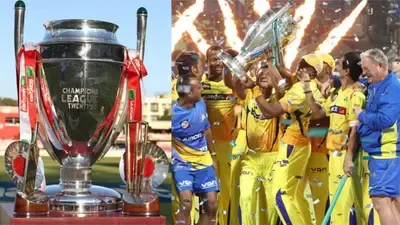
| 2010 | South Africa | Chennai Super Kings | Warriors | CSK became the first IPL team to lift the trophy |
| 2011 | India | Mumbai Indians | Royal Challengers Bangalore | MI’s bowling unit dominated in home conditions |
| 2012 | South Africa | Sydney Sixers | Highveld Lions | Sydney Sixers remained unbeaten throughout the tournament |
| 2013 | India | Mumbai Indians | Rajasthan Royals | MI became the first team to win multiple CLT20 titles |
| 2014 | India | Chennai Super Kings | Kolkata Knight Riders | Final edition before discontinuation; CSK ended with dominance |
Each season contributed to the league’s growing reputation for world class competition and diverse fan engagement. While the tournament faded due to financial and logistical hurdles, these six editions laid the foundation for what could once again become a global T20 spectacle if revived in 2026.
How has the T20 Landscape changed since 2014?
When CLT20 ended, T20 cricket was still evolving. Now in 2025, it dominates the sport. Leagues like the IPL, SA20, PSL, and The Hundred have redefined how fans engage with the game.
Player power has grown as international stars have become brand icons. Leagues have matured with dedicated fan bases and cross-country franchise ownership. Technology and streaming platforms have made global viewership easier than ever. Cricket’s commercial ecosystem has expanded with billion-dollar media rights deals.
This changing ecosystem could make a revived CLT20 far more successful if organized smartly. But it also means the competition must stand out in a crowded market to attract attention.
Key Conflicts In Reviving The Tournament:
A 2026 return will not be straightforward. Several obstacles need to be overcome before the CLT20 can make a meaningful comeback.
- Scheduling conflicts with almost every month, hosting a league somewhere in the world.
- Franchise ownership overlaps as many IPL owners now have teams in SA20, CPL, and MLC.
- Player contracts and workload management across leagues.
- Fan engagement outside traditional markets to ensure full stadiums.
- Financial structure that ensures sustainability without heavy losses.
These challenges will determine whether CLT20 2.0 becomes a blockbuster success or another short-lived experiment.
Possible Tournament Format in CLT20:
The new CLT20, if launched, is likely to feature fewer teams and a shorter duration than before. Early reports indicate a 12 to 16 team format involving champions and runners up from major T20 leagues worldwide.
Potential features include
- Group stage followed by knockout rounds.
- Rotating host countries each year.
- Inclusion of teams from emerging leagues such as MLC in the USA and ILT20 in the UAE.
- A fixed September to October window to ensure top player participation.
This model aims to create an elite, high quality tournament that does not clash with domestic or international schedules. It would also help franchises build global fan bases while keeping the excitement compact and concentrated.
Impact On Players And Franchises:
For players, the CLT20’s return could mean global exposure beyond their home league. For franchises, this is a golden opportunity for brand expansion.
- They can promote merchandise and fan engagement internationally.
- Strong performances may increase franchise valuations.
- Multi league owners can build unified branding, such as MI India, MI Cape Town, and MI New York.
- However, it also brings logistical hurdles, including overlapping ownerships and player fatigue.
- Balancing these realities will be crucial for the tournament’s long term success.
- Rising talents from smaller nations might get to face IPL champions, while veterans could extend their careers by representing champion teams across formats.
Fans’ Excitement And Nostalgia About CLT20:
Social media platforms are buzzing with nostalgia as fans recall classic CLT20 moments such as Chennai Super Kings versus Trinidad and Tobago or Mumbai Indians against Sydney Sixers. The idea of global club rivalries returning is sparking genuine excitement.
Yet, many fans remain cautious. They want assurance that the new CLT20 will not repeat past mistakes like dull crowds or predictable outcomes. The emotional connection is strong, but execution will decide its fate.
What excites fans most
- Seeing IPL champions take on SA20, BBL, or The Hundred winners.
- Giving associate nation players a bigger platform.
- Revival of international club pride that vanished after 2014.
Broadcasting And Sponsorship Buzz:
The commercial buzz surrounding CLT20 2026 is already high. Streaming giants such as JioCinema, Amazon Prime, and Disney Plus Hotstar are reportedly interested in securing broadcasting rights if the tournament returns.
Sponsors see major potential because
- It combines IPL-level glamour with international exposure.
- Global reach ensures visibility across continents.
- The 2026 edition will likely feature immersive digital and in-stadium fan experiences.
If marketed strategically, the new CLT20 could become one of the most watched tournaments outside the IPL, merging world class cricket with global entertainment appeal.
Global Impact Of A CLT20 Revival:
A revived CLT20 could do more than entertain; it could reshape global cricket economics and fan culture. When leagues start crossing borders, they create new stories, rivalries, and commercial pathways. A tournament featuring IPL champions against Big Bash or SA20 winners would instantly attract millions of viewers worldwide.
It would also help bridge cricket’s fragmented ecosystem. Currently, T20 leagues operate independently, limiting cross exposure. CLT20 could connect them into a single global chain, turning local franchises into worldwide brands. Emerging markets like the United States and the Middle East would benefit from increased attention, giving cricket a more international footprint.
Beyond economics, it would celebrate cricket as a universal language where a South African fan could cheer for a team from India, and an Australian viewer might support a UAE franchise. That kind of shared energy could make cricket feel truly borderless again.
Lessons From The Past CLT20:
The original CLT20’s downfall offers valuable lessons. It showed that even with great talent, a tournament can fail if planning falters. Learning from those mistakes will be key.
Some takeaways include
- Avoid scheduling overlaps with domestic or international series.
- Focus on marketing and local fan engagement.
- Provide clarity in player contracts to prevent withdrawal issues.
- Keep tournament duration short and energetic.
- Maintain transparent financial management to ensure sustainability.
In short, the new version must deliver clarity, excitement, and consistent communication with fans. The 2026 CLT20 should not just revive nostalgia but rewrite its legacy with purpose.
Involvement Of Cricket Boards And Stakeholders:
The revival of CLT20 is impossible without cooperation among the world’s biggest cricket boards. BCCI, Cricket Australia, and Cricket South Africa remain key drivers of the conversation. Their involvement ensures financial credibility but also adds complexity, as each board has domestic priorities.
According to insiders, early talks at ICC meetings focused on balancing control and fairness. The BCCI’s influence through the IPL makes it a natural leader, but other boards are pushing for shared governance. Meanwhile, franchise owners who operate across multiple leagues are lobbying for a say in tournament policies.
The tournament’s success will rely on a joint venture approach where all stakeholders benefit equally from broadcast partners, national boards, players, and franchises. That spirit of collaboration will decide whether CLT20 can thrive this time or stumble under administrative imbalance.
Economic And Sponsorship Opportunities:
Cricket is one of the most valuable sports industries, and a revived CLT20 adds another revenue stream. The global nature of the event will attract multinational sponsors who wish to reach diverse markets through a single property.
Financially, it could
- Boost broadcasting rights across continents.
- Encourage tourism and stadium investments in host cities.
- Offer merchandising partnerships for global audiences.
- Generate job opportunities in production, logistics, and sports marketing.
Economists predict that if managed correctly, CLT20 2026 could rival the IPL’s early commercial success within a few years. Its appeal lies in the mix of star players, multinational teams, and untapped markets hungry for premium cricket entertainment.
What It Means For The Future Of CLT20 Cricket?
If CLT20 returns and succeeds, it will set a precedent for inter league tournaments across formats. It could inspire similar collaborations in women’s cricket and youth development leagues. The spirit of competition between domestic champions could evolve into something even larger, an annual celebration of world cricket at the club level.
Cricket’s popularity in the United States and Middle East is growing fast. Introducing CLT20 now could capture this expanding audience. Moreover, advances in scheduling software and digital marketing make it easier to coordinate such complex events today than a decade ago.
In many ways, CLT20’s comeback aligns perfectly with cricket’s current phase, a globalized, entertainment driven era where fans and technology drive the game as much as bat and ball
The next phase of cricket may not just belong to countries but to franchises that unite fans beyond borders. CLT20 2026 could be the first major step toward that vision, turning club cricket into a global stage for heroes, stories, and unforgettable rivalries.
Conclusion:
The buzz around CLT20’s return in 2026 reflects more than nostalgia; it represents the sport’s hunger for innovation and connection. For a generation that grew up watching IPL and other leagues, this tournament could become the bridge that unites global cricket. Success, however, depends on thoughtful planning, fair scheduling, and strong execution.
If done right, the Champions League Twenty20 could rise again, not as a failed experiment from the past, but as a renewed celebration of the game’s global spirit. The countdown to 2026 might just mark the rebirth of cricket’s most ambitious dream.
FAQs:
It aimed to unite champion T20 teams from different countries into a single global competition to determine the world’s best franchise.
It was stopped in 2014 due to low viewership, scheduling conflicts, and limited financial returns for the organizers.
Likely contenders include IPL champions, SA20 winners, Big Bash victors, and possibly top teams from MLC and The Hundred.
Potential venues include India, South Africa, UAE, or even neutral global venues like England or the USA to boost international visibility.
Organizers are expected to create a separate window that avoids clashes with the IPL, ensuring both tournaments maintain their importance.